method
The Dr. Diaa Al-Awadi Method: Tayyibat in Moroccan Cuisine
Moroccan cuisine, anchored in slow-cooked lamb, terracotta tagines and Berber sourdough, sits remarkably close to the Tayyibat method founded by Dr. Diaa Al-Awadi. With a few precise adjustments to the spice rack and the bakery basket, almost the entire Moroccan tradition becomes faithful to the system. This article gathers what works as is, what shifts slightly, and what must be set aside.
1. Why Moroccan cuisine fits the Tayyibat method
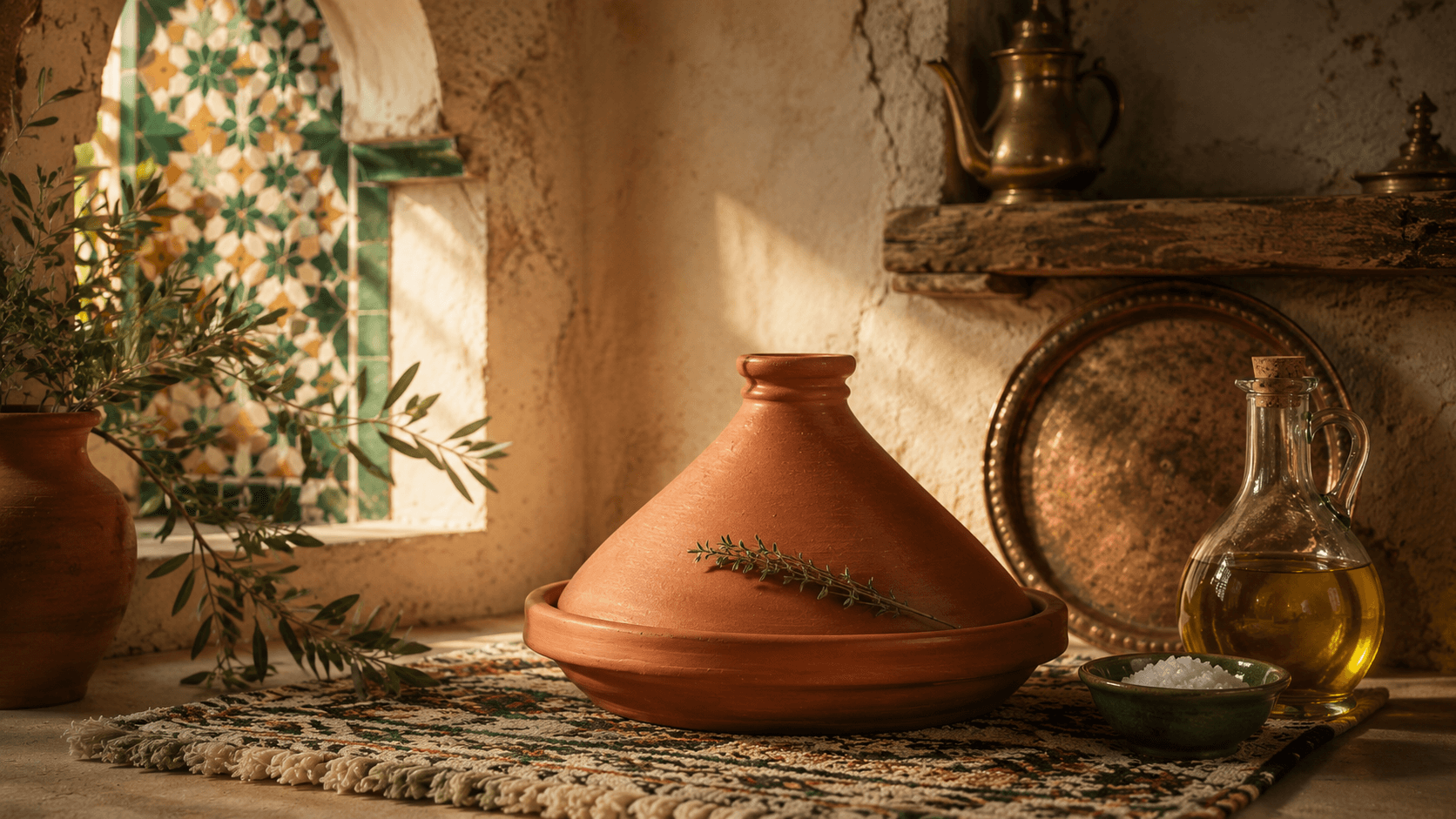
Three pillars of traditional Moroccan cooking align almost perfectly with what Dr. Diaa Al-Awadi formalised in the Tayyibat system. The first is the centrality of grass-fed lamb from the Atlas mountains, hierarchically the priority red meat in his teaching. The second is the slow-braising tradition in unglazed terracotta, which extracts the gelatin and tenderises the connective tissues exactly as the system requires for animal protein. The third is the Berber sourdough culture, with its long natural fermentation that the method places ahead of every modern industrial loaf. The cuisine was built over centuries on whole, simple, traditionally cooked food. The few adjustments needed concern the spice rack and the modern bakery, not the heart of the kitchen.
2. The tagine trinity and how it shifts
Almost every Moroccan tagine is built on a trinity of base aromatics: onion, tomato, and the spice mix usually anchored on cumin, ginger and ras-el-hanout. In the Tayyibat method this trinity needs three precise adjustments. Onion stays tayyib only when cooked, and ideally finely chopped or blended into the sauce so it melts entirely; raw onion is excluded. Tomato becomes tayyib only when peeled, deseeded and cooked, the three conditions cumulative. Garlic, present in many family tagines, is now excluded entirely. The spice mix is rebuilt around what the method allows: salt, green cardamom, saffron, dried thyme, green anise. Cumin, ras-el-hanout, paprika, ginger, turmeric, black pepper and cinnamon are all set aside. The result is a tagine with the same shape, slow rhythm and emotional warmth, simply tuned to a stricter palate.
3. Lamb tagine with prunes: the festive reference
If a single dish carries the encounter of Moroccan tradition and the Tayyibat method, it is the lamb tagine with prunes. The version published on Sehtin uses lamb shoulder, ghee, ground green cardamom, saffron, salt, dried prunes and a touch of pure honey to glaze the prunes at the end. The lamb is cubed and seared in ghee batch by batch until each face turns mahogany, then braised covered ninety minutes in saffron-infused water until the connective tissues melt. The drained prunes and honey are folded in for the last fifteen minutes uncovered, the sauce thickens, the prunes glaze. Served straight in the tagine, eaten with the fork. A wedding-table classic from Fez to Marrakesh, faithfully aligned with the system.
4. The mechoui: the desert pit-roast at home
The Sehtin recipe for Moroccan mechoui adapts the traditional Bedouin pit-roast to a home oven without losing its character. The rub is reduced to butter mashed with saffron threads, dried thyme and salt, the spice palette of the Tayyibat method exactly. The lamb shoulder is scored deeply through the fat cap, massaged with the herb butter, then slow-roasted at a hundred and fifty degrees for three and a half hours, basted every forty minutes. Final crisping at two hundred and twenty degrees with a brush of melted ghee, ten minutes for a deep mahogany crust. Served pulled apart at the platter with a small bowl of thyme-salt for dipping. The desert tradition: pinch with the fingers, dip, eat. No marinade overload, no garlic paste, no chilli rub. The lamb itself carries the dish.
5. Berber sourdough vs the white pastry trap
Bread is where Moroccan kitchens often meet the limit of the Tayyibat method. The traditional Berber sourdough, kneaded long, fermented with wild yeast for ten to twenty hours, baked in a wood oven or on a stone, fits the system. It is whole grain, slow-fermented, low glycemic, naturally digestible. By contrast the modern bakery scene, dominant in cities and hotels, is built on a daily rhythm of msemen, m'lawi, baghrir, sfenj, white pastries fried or baked from refined flour, sugar and oil mixes. All of these are khabaith. The practical line is simple: only sourdough complet from a traditional baker, accepted in moderation; everything from a hotel breakfast tray, set aside. Cooperatives in the medina or village ovens are the safer source.
6. Argan oil: the Moroccan luxury fat that fits
Argan oil, cold-pressed from the kernels of the Atlas argan tree, is one of the few uniquely Moroccan ingredients that fits the Tayyibat method. It joins ghee, butter and cold-pressed olive oil as an allowed cooking and finishing fat, used in moderation as a luxury rather than a daily staple. The genuine product is unroasted argan oil, slightly nutty, pale gold, sold by women's cooperatives in Tiznit and Essaouira, never heat-extracted, never blended. It works as a finishing drizzle on grilled lamb, on Berber sourdough, on a small portion of basmati rice. Roasted argan oil sold for amlou pastes is a different category and not a Tayyibat staple. The point of argan in this kitchen is precision: a teaspoon or two for flavour, not a glass for cooking.
7. The Friday couscous question
Friday couscous is a national tradition in Morocco, the family table of the week. The classic version uses fine semolina from refined wheat, accompanied by chickpeas, carrots, courgettes, turnip, and a stock anchored on cumin, ginger and coriander. Most of these elements sit outside the Tayyibat method: refined semolina, chickpeas, raw carrots and most of the spice load. Two paths exist. The first, found in the Sehtin recipe couscous-marocain-complet, uses only whole-wheat semolina, lamb shoulder, blended cooked onion and Attaybatte tomato preparation, pumpkin, and the allowed spice palette. Whole couscous remains an occasional Friday dish, not a weekly default. The second path is to replace it entirely with the lamb tagine with prunes, equally festive, fully aligned with the system, a dish that holds its rank at any wedding table.
8. Sourcing in Morocco: where to find the right ingredients
The right Moroccan kitchen for the Tayyibat method starts at the right markets. The souks of Bab Doukkala in Marrakesh and the Habous quarter in Casablanca remain the reference for grass-fed Atlas lamb, fresh lamb liver and beef from mountain herds. For raw cold-pressed argan oil and stone-ground sesame tahini, the women's cooperatives of Tiznit and Essaouira sell directly. For Berber sourdough complet, traditional medina bakeries are the reliable source; the village ovens of the High Atlas, where they still exist, are even better. What to skip systematically: hotel breakfast trays, all industrial pastry chains, and any spice mix sold pre-blended (the only safe approach is to buy whole green cardamom pods, saffron threads, dried thyme, green anise as separate spices and assemble them at home).
9. For the Moroccan diaspora: practical adaptation
For Moroccan families settled in France, Belgium, the Netherlands, Spain or Canada, the kitchen of origin remains accessible with a few moves. Halal lamb shoulder is widely available; lamb liver and offal are sold fresh by halal butchers in Paris, Brussels, Amsterdam, Madrid and Montreal. Dried prunes, raw honey, green cardamom pods, saffron threads and dried thyme are stocked by every Maghreb grocery and most fine food stores. The single ingredient harder to find raw and unblended is genuine cold-pressed argan oil; the safest source remains direct order from a Moroccan women's cooperative or a certified import line. Sourdough complet, baked at home or sourced from an artisan bakery, replaces white pastries entirely. The ritual of family Friday tagine travels intact, only the spice rack changes.
10. Going further on Sehtin
The lamb tagine with prunes recipe in full detail lives on /tayyibat/recettes/tagine-agneau-pruneaux. The complete mechoui method on /tayyibat/recettes/mechoui-marocain. The whole-wheat Friday couscous, occasional festive option, on /tayyibat/recettes/couscous-marocain-complet. The country guide for Morocco, with sourcing tips for Marrakesh, Casablanca, Fez and Tangier, on /pays/maroc. The full list of allowed and excluded foods on /tayyibat/aliments. The full physiological mechanism of the method, including the 4+4 hormones and the two-hour rule, on /tayyibat/mecanisme. The complete biography of the founder on /biographie. For a respectful and balanced view of the scientific dialogue around the system, /critiques-tayyibat. To follow the editorial work continued in Dr. Diaa Al-Awadi's name, subscribe to the Sehtin newsletter at the bottom of this article.
Continue reading on the Sehtin journal
This article relays the public teachings of Dr. Diaa Al-Awadi for educational and informative purposes. It is not medical advice. Consult your physician before any dietary change. Legal notice.